Αρχαιολογικό Μουσείο Θηβών
🏛️ Overview
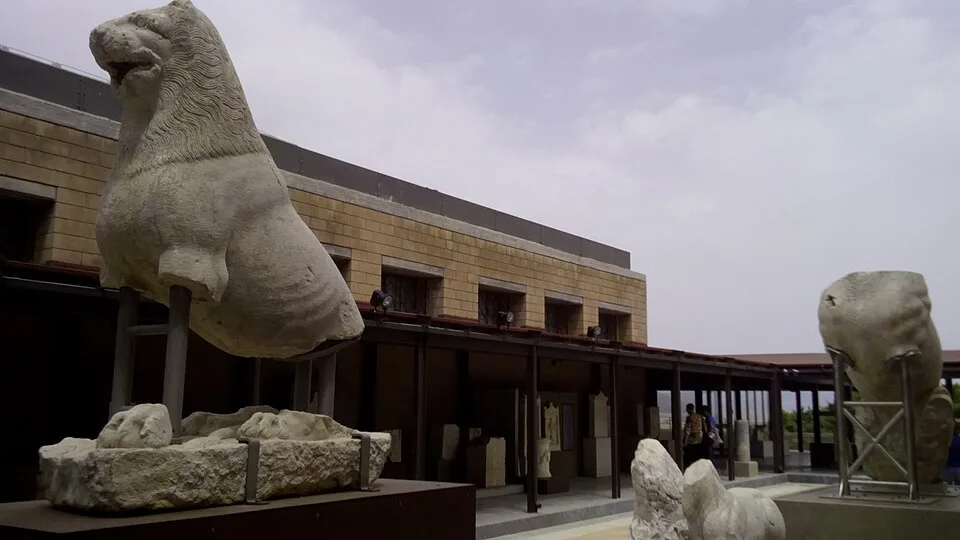
The Archaeological Museum of Thebes is one of the most important regional museums in Greece, dedicated to the rich history of Boeotia. Its collections span from Prehistoric times to the Post-Byzantine era, showcasing millennia of continuous human activity.
The museum is especially known for:
- Rare Mycenaean artifacts, including cylinder seals from the palace of Thebes
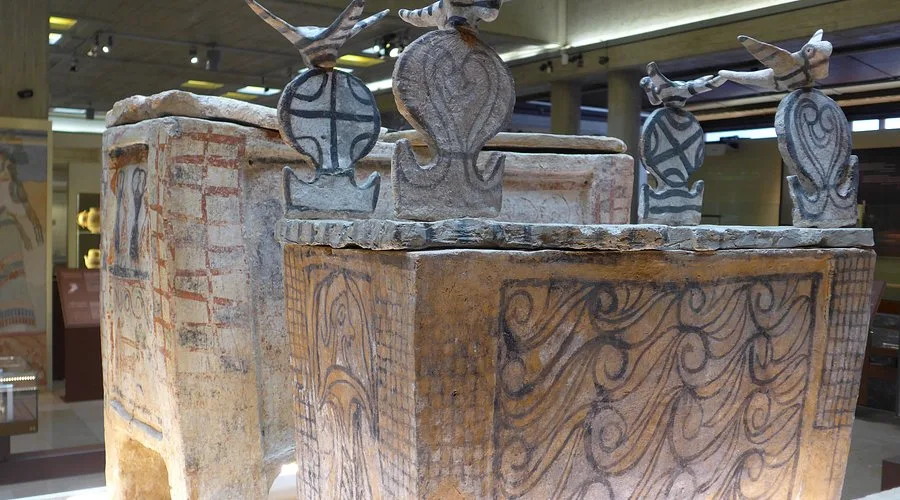
- Unique painted clay larnakes from Tanagra
- Exhibits covering the evolution of Boeotian society, culture, and mythology
🏗️ History
- First collection established in 1894
- First proper museum building: 1905
- Current modern complex completed and redesigned in 2015
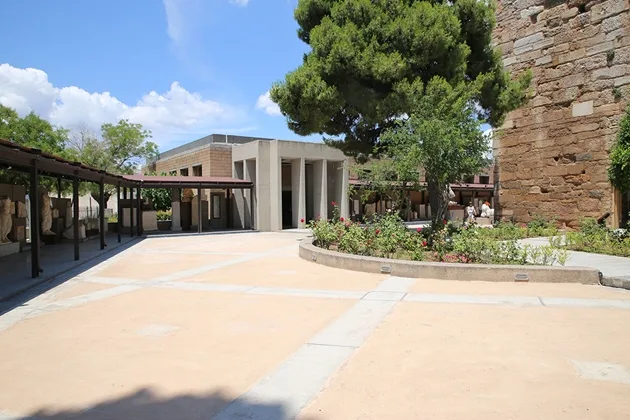
The museum today integrates older structures with a modern exhibition space, creating a major cultural hub for the region.
🖼️ Collections & Exhibitions
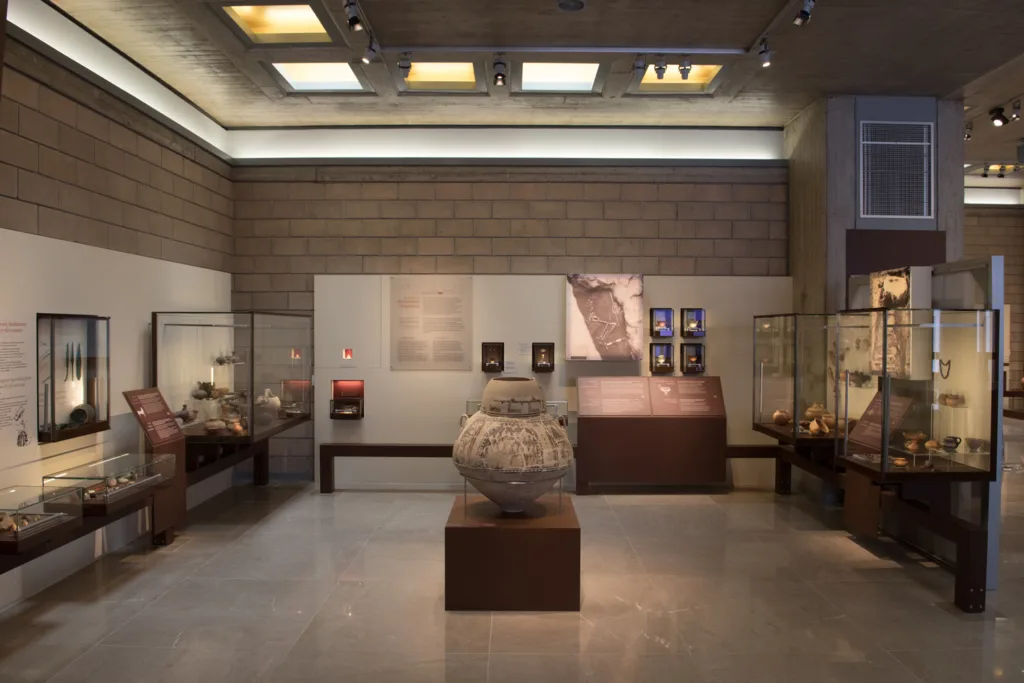
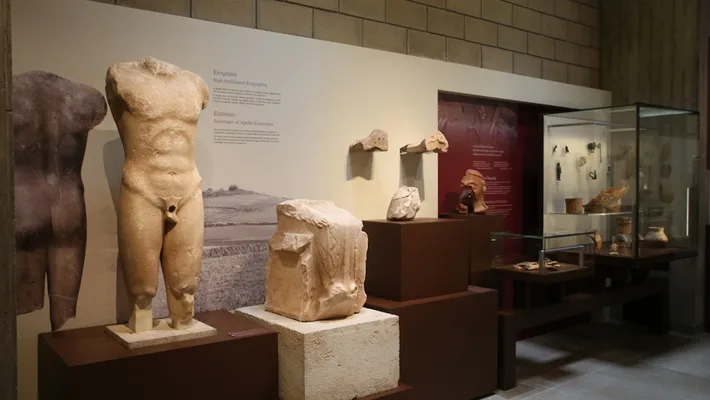
The permanent exhibition is organized chronologically and thematically, including:
- Prehistoric & Neolithic settlements
- Mycenaean civilization (highlight section)
- Archaic, Classical & Hellenistic periods
- Roman, Byzantine & Ottoman eras
- “Landscapes & Myths of Boeotia” thematic gallery
🕒 Opening Hours
Summer (Apr–Oct):
- 08:00 – 20:00 (closed Tuesdays)
Winter (Nov–Mar):
- 08:30 – 15:30 (closed Tuesdays)
🎟️ Tickets
🧰 Visitor Services
- Educational programs
- Museum shop
- Parking facilities
- Full accessibility (ramps, elevators, accessible WC)
⭐ Why Visit?
The museum offers a complete narrative of Boeotia’s history, making it essential for understanding:
- The mythological importance of Thebes (home of Cadmus, Heracles, Oedipus)
- The rise of Mycenaean power in central Greece
- The cultural continuity from antiquity to later periods
🏛️ Mythological Artifacts in the Αρχαιολογικό Μουσείο Θηβών
The museum is one of the best places in Greece to see how mythology and archaeology connect, especially because Thebes itself is central to myths like Cadmus, Oedipus, and Heracles. Many artifacts don’t just represent daily life—they visually narrate mythological stories.
🧿 Key Mythological Artifacts & Highlights
🏺 1. Vase with the Myth of Cadmus
- A skyphos (drinking cup) depicts the founding myth of Thebes by Cadmus
- Shows early storytelling through pottery decoration
- Links archaeology directly with the origin myth of the city
🐉 2. Sphinx & Oedipus Imagery
- Artifacts featuring the Sphinx, tied to the myth of Oedipus
- These representations symbolize:
- Riddles
- Fate and destiny
- Divine punishment
➡️ The Sphinx is one of the most iconic mythological creatures associated with Thebes
💪 3. Heracles (Hercules) Depictions
- Thebes is the birthplace of Heracles
- Artifacts include:
- Black-figure cups showing his Labors
- Scenes of strength and heroism
➡️ These works highlight how myth shaped identity in Boeotia
⚱️ 4. Painted Clay Larnakes (Sarcophagi)
- Found in Tanagra, unique in mainland Greece
- Often decorated with:
- Ritual scenes
- Symbolic imagery related to the afterlife
➡️ These connect mythology with beliefs about death and the journey beyond
🔮 5. Mycenaean Cylinder Seals
- From the “Treasure Room” of the palace of Thebes
- Engraved with:
- Divine figures
- Ritual and symbolic scenes
➡️ Likely used in administration but also reflect religious and mythological symbolism
🗿 6. Funerary Stelae & Reliefs
- Carved stone monuments with:
- Some reflect mythological ideals of heroism and glory
🍷 7. Dionysian & Ritual Pottery
- Cups and vessels depicting:
- Dionysus and his followers
- Symposia (ritual drinking scenes)
➡️ Connects mythology with everyday religious practices
🧭 Special Section: “Landscapes & Myths of Boeotia”
One of the most important areas in the museum:
- Focuses entirely on local mythology
- Includes references to:
- Cadmus (founder of Thebes)
- Oedipus (Theban king)
- Heracles (Theban hero)
- Combines artifacts, reliefs, and multimedia storytelling
⭐ Why These Artifacts Matter
- They show how myths were part of daily life, not just stories
- Offer visual evidence of ancient storytelling
- Connect real places (Thebes) with legendary narratives
- Reveal how ancient Greeks understood: